 |
 |
 |
 |
 |
 |
FrameSLT FrameSLT is a versatile and flexible structure management utility that greatly enhances FrameMaker's native structured interface. Its wide array of functionality is unique even among other structured authoring tools and is a must-have for anyone who performs any kind of frequent structure management tasks, including conversions, cleanups, and general purpose maintenance. The features of FrameSLT can literally reduce hours or even days of work into seconds, over and over again.
The power of XPath Most FrameSLT functionality is based on its sturdy XPath engine, making it the first of its kind to really capitalize on the XML-style markup available in a structured FrameMaker document. Using the advanced power of XPath, you can perform precise queries of your structure tree based on elements, attributes, and content, and you can perform a wide variety of automated structural modifications based upon these queries. If you thought search and replace was cool, you haven't seen anything yet.
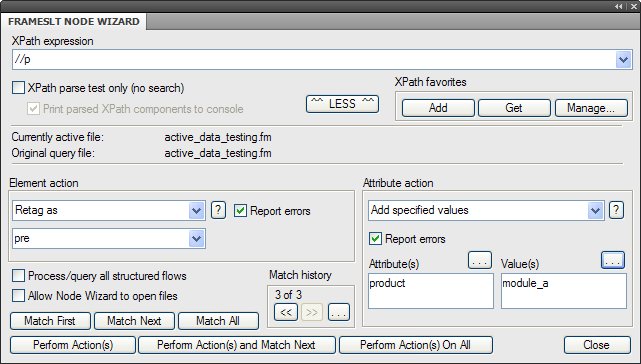
Node Wizard Because FrameSLT is XPath-based, the true power of markup is at your disposal. With FrameSLT you get the versatile Node Wizard utility, a necessity for structure management within FrameMaker. If you ever thought that there should be a quicker way to perform repetitive structure management activities, you were right. The Node Wizard harnesses XPath to navigate your FrameMaker structure trees and automate a wide variety of common activities, such as:
Node Wizard Scripts In addition to the interactive Node Wizard, FrameSLT includes a Node Wizard Scripting feature with which you can fully automate Node Wizard activities as a batch. Furthermore, it significantly extends FrameSLT functionality into areas such as:
With FrameSLT 3.0, the scripting feature has truly matured into a heavyweight structural management and content manipulation tool. To get a true feel for its capabilities, download the trial and run through the tutorial.
API exposure In addition to its graphical dialog boxes, FrameSLT's XPath parser and navigator are fully exposed to external utilities, such as other API clients, FrameScript®, and ExtendScript. With these tools and the appropriate expertise, you can use FrameSLT to facilitate any nature of customized XPath-driven activities. You can also use it to call Node Wizard Scripts.
Complex, but friendly FrameSLT documentation includes comprehensive XPath examples and lots of tutorials to get you started. If you don't know XPath, you have few better ways to learn than FrameSLT. It parses all XPath on the spot and provides detailed error reporting for any mistakes.
Translation support FrameSLT supports customizable translations to its menus and dialog boxes. Using simple "language files," you can localize the plugin to whatever language you desire. Note that we have provided the capability only, not necessarily any particular translations.
The way structured FrameMaker should be If you've thought that you should be able to get more out of your structured FrameMaker markup, FrameSLT is your answer. And, if you've never pursued XPath/XSLT before because it seemed complicated, you'll be pleased to know that FrameSLT makes it as simple as possible, with features such as detailed dialog boxes and instant, comprehensive error reporting. By the way, even though you don't need XML, that doesn't mean you can't use it. FrameSLT can query and repurpose information loaded into FrameMaker from XML, just as it can with structured documents created in FrameMaker. In fact, you can open "raw" XML directly into FrameMaker with no structured application, then extract the content directly into your production template. That means XML content brought straight into your files and formatted, without the need for read/write rules or any of the other traditional overhead. If you find yourself bogged down with some repetitive task, chances are that FrameSLT can automate it. If you have any specific questions, feel free to contact us.
Please note that although FrameSLT behaves like an XSLT processor in some ways, it is not true XSLT, and is not endorsed by or associated with the W3 Consortium in any way. |